Itinerary
A First Catalonia Trip Without Barcelona: Three Rail Bases
Build a six- or seven-night first Catalonia trip around Girona, Vic and Tarragona, with a simpler two-base fallback for rail disruption.
Leaving Barcelona out of a first Catalonia trip is sensible when the aim is smaller cities, walkable evenings and fewer timed monuments. It is not sensible if the route simply recreates a capital-city checklist across three towns. Girona and Tarragona make the dependable rail spine. Add Vic only when the R3 timetable and engineering notices leave a useful day rather than a fragile connection.
Plan six nights as Girona three and Tarragona three. With seven nights, place one night in Vic between them if the rail plan works. This order moves from northern medieval fabric to an inland market city and finishes with Roman Tarragona beside the Mediterranean.
The route that works without Barcelona sightseeing
- Days 1–3: Girona, using the first afternoon to settle and two complete days for the historic city plus one nearby rail outing.
- Day 4: Vic overnight when R3 service is workable; otherwise remain in Girona or travel directly to Tarragona.
- Days 5–7: Tarragona, with one complete Roman-city day and one coast, Reus or slow-city day.
- Transport: train between bases, with a Barcelona interchange possible even though Barcelona is not a sightseeing stop.
- Budget: roughly €80–155 per person per day sharing a room, including intercity transport, one or two paid visits, and ordinary meals.
- Reserve: the first night, Girona and Tarragona weekend rooms, and any high-speed ticket used to shorten a transfer. Keep Vic cancellable until current R3 service is clear.
Check the journey on Rodalies de Catalunya close to travel. The line diagram proves that places connect; it does not prove that a particular train runs normally on a day of engineering work.
Girona is the northern anchor, not a Barcelona day trip
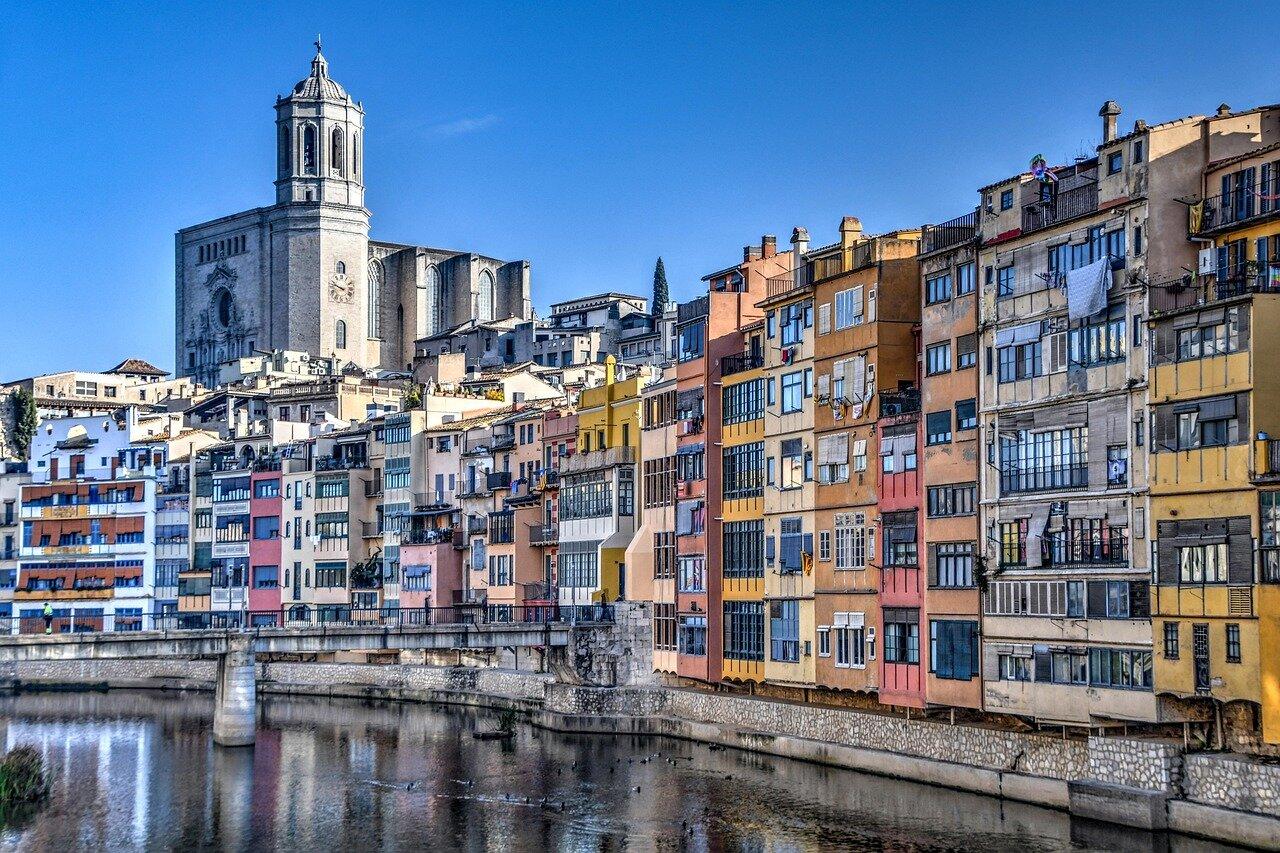
Give Girona three nights. On arrival, cross the Onyar, use Rambla de la Llibertat to orient yourself and stop before climbing every stair in the Barri Vell. The city council's historic-city guide links the Força Vella, medieval walls, Jewish Quarter, cathedral area and Sant Pere de Galligants; seeing those layers coherently takes more than a hurried afternoon.
Use the first complete day for the old city. Begin at the walls before heat or crowds build, then descend through the cathedral area rather than repeatedly climbing from the river. Visitors with reduced mobility should plan around the steep eastern side: Girona's accessible lower city remains rewarding even when wall walks and stepped lanes do not.
The second full day can stay in Girona—museums, Sant Daniel and the city's modern side—or become one simple rail outing. Figueres is the obvious choice for Dalí, but only with a museum reservation. Banyoles requires an onward bus and therefore creates a different level of friction. Do not add a rental car merely because the third night exists.
Compare Girona stays for three nights between the level station side and the atmospheric but stepped old-town edge.
Vic earns its night only when the R3 earns your trust
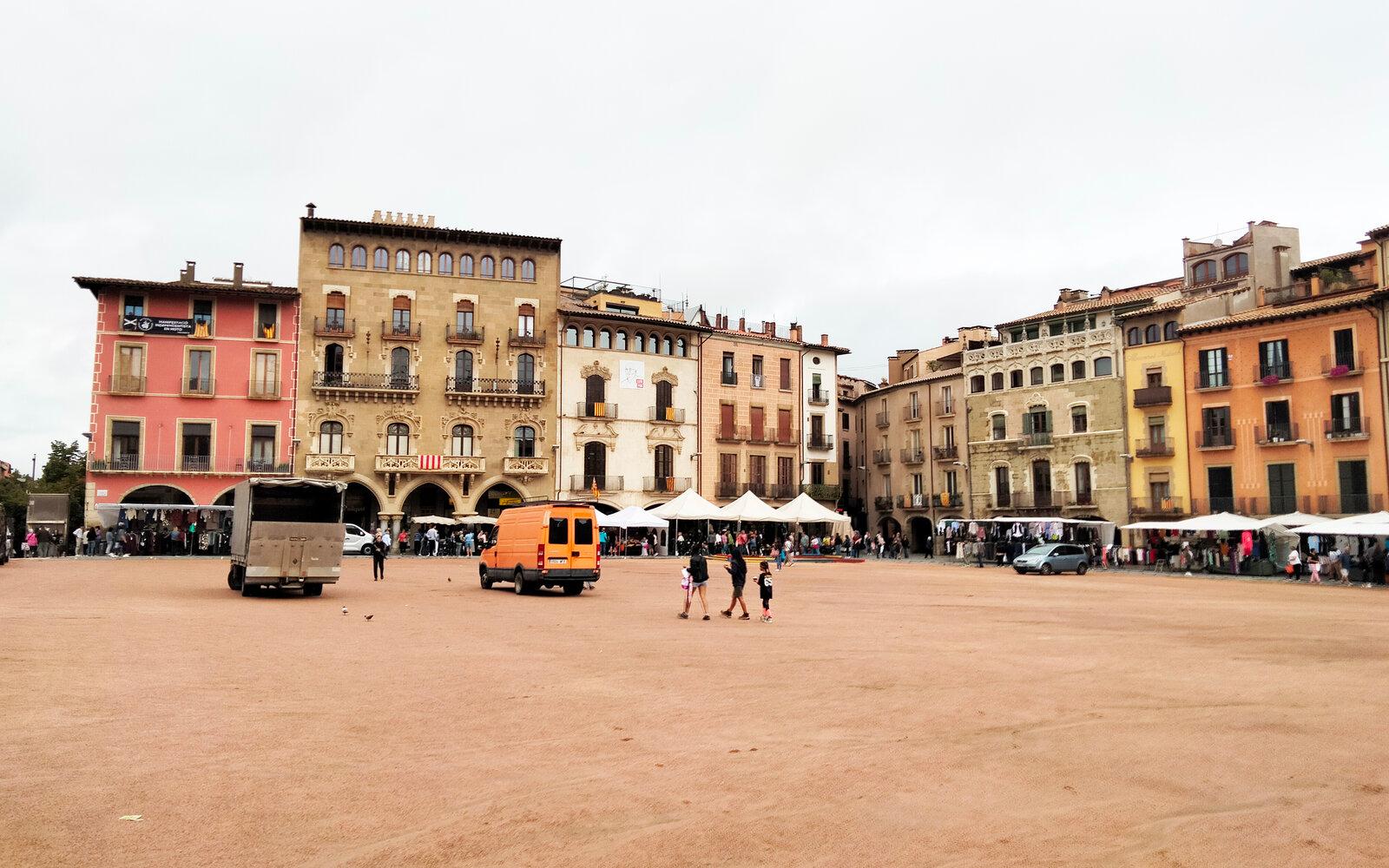
Vic changes the trip's scale. Its Plaça Major, market rhythm, cathedral quarter and Museu Episcopal belong to a working inland city rather than a monument corridor. The tourist office sits beside Plaça Major and provides a sensible first stop; verify its current hours through the official visitor listing.
Arrive before lunch, leave luggage and walk the compact centre. Market days give the square a different purpose but can also make arrival and photography less relaxed. One night is enough when the train arrives by late morning and the onward journey has a protected margin.
The weakness is transport. Vic sits on the R3, a line subject to major works and replacement plans. A Girona–Vic journey may involve a change or a route that looks indirect beside the map. Do not book a non-refundable Vic room until the dated planner shows a useful arrival and an onward train the following day.
If R3 disruption turns the stop into several uncertain legs, omit Vic. Travel from Girona toward Tarragona through Barcelona and allocate the spare night to whichever anchor better suits your interests. That is a successful fallback, not a diminished itinerary.
Tarragona should finish at sea level
Tarragona's central station sits below the old city near the water. Camp de Tarragona is a separate high-speed station outside the centre. A fast train to the wrong station can produce a slower arrival after the connecting bus or taxi is counted.
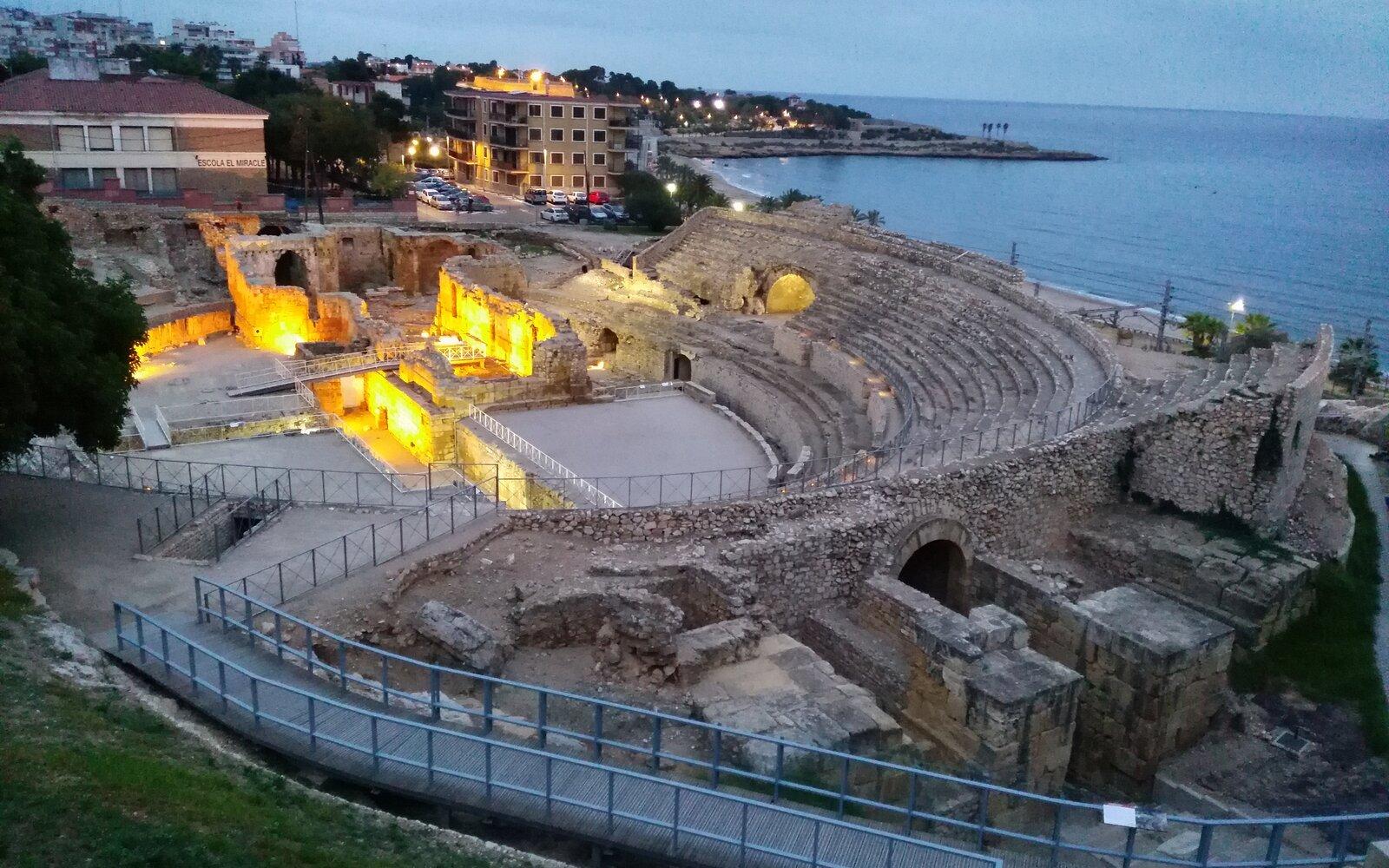
Use arrival afternoon for Rambla Nova, the Balcó del Mediterrani and the descent toward the amphitheatre exterior. On the complete day, begin in the Part Alta and follow the surviving Roman city downhill. Tarragona tourism's Roman route identifies the main remains, but opening rotations mean the route must work even when one municipal interior is closed.
Keep the third Tarragona day loose. Reus offers Modernisme and a market by regional transport. Altafulla provides a smaller old town and coast. Staying in Tarragona allows a slow Mercat Central morning and El Serrallo lunch without another checkout. Choose one; the purpose of the final base is to stop accumulating luggage moves.
Allow €15–30 for a weekday lunch and €25–45 for a relaxed dinner before drinks. Roman-site admission, a museum and local transport add roughly €15–35 to an active day, but check current combined-ticket terms rather than assuming every site is included.
What you give up by skipping Barcelona
This route does not replace the Sagrada Família, the density of Barcelona's museums or the city's late-night range. It offers something else: evenings when the day's historic area remains walkable, shorter local movements and a clearer contrast between north, interior and south.
International arrivals may still pass through Barcelona airport or Barcelona Sants. Treat the city as a connection, not an ideological obstacle. If a delay creates an unplanned Barcelona night, protect the next reservation and resume the route; do not attempt to compensate with a five-hour sightseeing sprint.
For six nights, the best version is Girona three and Tarragona three. For seven, Vic can make the journey more distinctly Catalan—but only when the R3 is operating well enough that transport does not become the story of the trip.
Related guides
- Ten Days in Catalonia: Barcelona, Girona, Coast and Tarragona
Allocate ten Catalonia nights across Barcelona, Girona, the Costa Brava and Tarragona without losing whole days to transfers.
- Seven Days in Catalonia by Train: A First-Trip Itinerary
A workable Barcelona–Girona–Figueres–Tarragona rail week with station choices, realistic buffers, and an indicative budget.
- Five Days by Train: Barcelona, Girona and Tarragona
A five-day rail plan linking Barcelona, Girona, and Tarragona with sensible hotel changes, station buffers, and a realistic daily budget.
Are you in the know?
Receive new articles, local updates, and occasional offers from selected partners. We never share your email address. Unsubscribe at any time.
By subscribing you agree to our privacy policy.